
Grad school, scholarships, internships, transfer applications: sooner or later, something asks for a letter of recommendation. And for a lot of students, emailing a professor to ask for one feels more stressful than the application itself.
It doesn’t have to be. Professors write these letters all the time, and most are happy to help a student they know. The trick is asking the right person, early enough, and making the letter easy to write. Here’s exactly how to do it, with an email template and a planner that works back from your deadline.
The short version
- Ask 4 to 6 weeks before the deadline. The University of Pittsburgh’s career center says to give “at least 4-6 weeks” of notice.
- Pick someone who knows your work, not just the biggest name.
- Ask in person if you can, by email if you can’t.
- Send a packet: resume, a summary of your work in their class, what you’re applying for and every deadline.
- Remind them two weeks out and thank them within a week of submitting.
Work back from your deadline
Enter your earliest application deadline and the planner gives you the dates that matter.
Based on the career-center advice of at least 4 to 6 weeks’ notice and a reminder two weeks out. If a date has already passed, ask today and be upfront about the short notice.
Who to ask
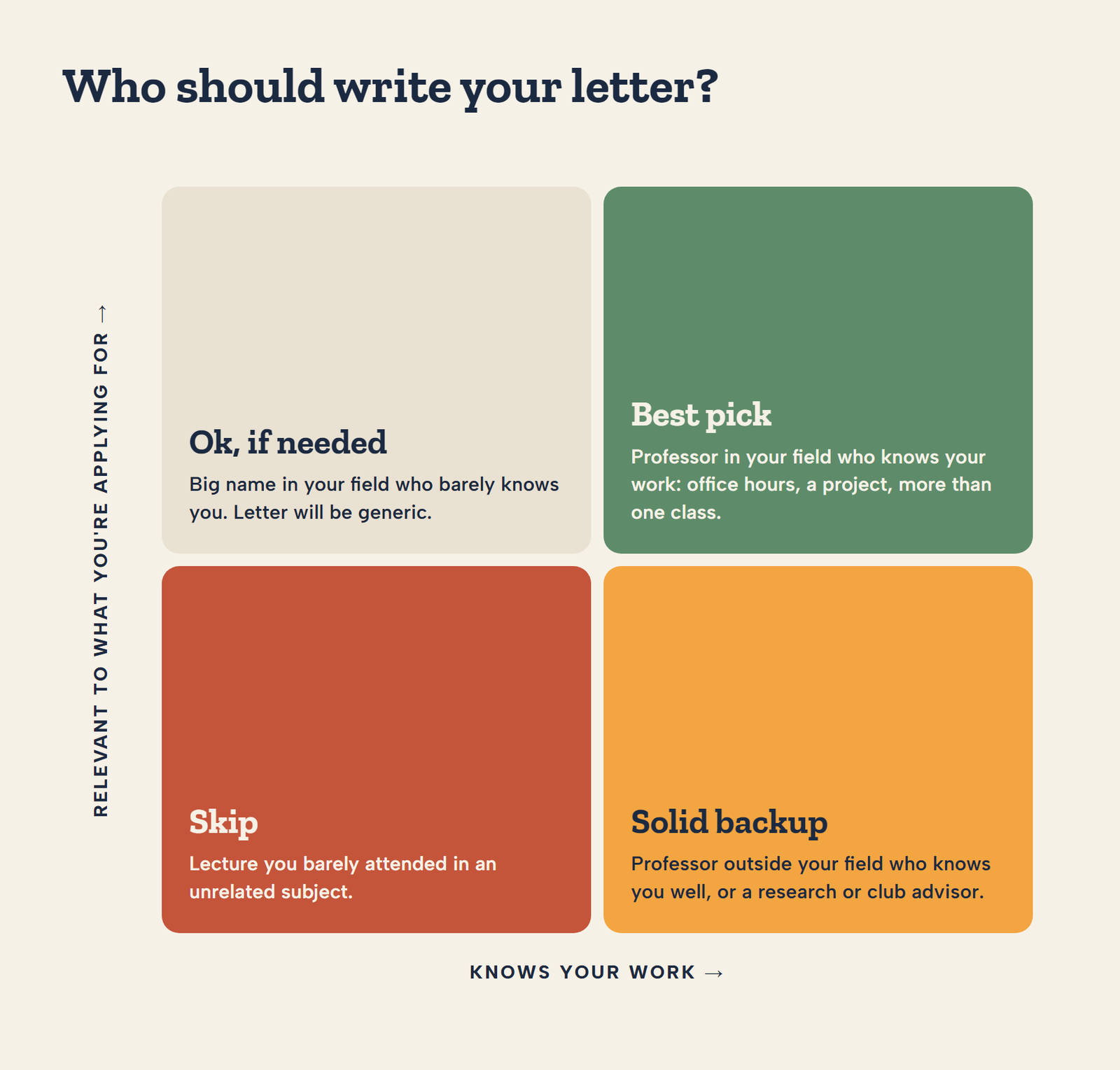
The best letter comes from someone who can talk about you specifically: how you think, how you work, what you did in their class. A short, detailed letter from a professor who knows you beats a generic one from a department head who barely remembers your name.
Good choices, roughly in order:
- A professor whose class you did well in and talked to outside of class (office hours, questions, a project).
- A professor you’ve had for more than one course.
- A research supervisor, lab lead or faculty advisor for a club or project.
- A TA who taught your section, if the application allows it (many grad programs want faculty).
Don’t have anyone yet? Start now. Pitt’s career center puts it simply: participate in class and visit office hours. Even two or three conversations give a professor something real to write about.
When to ask
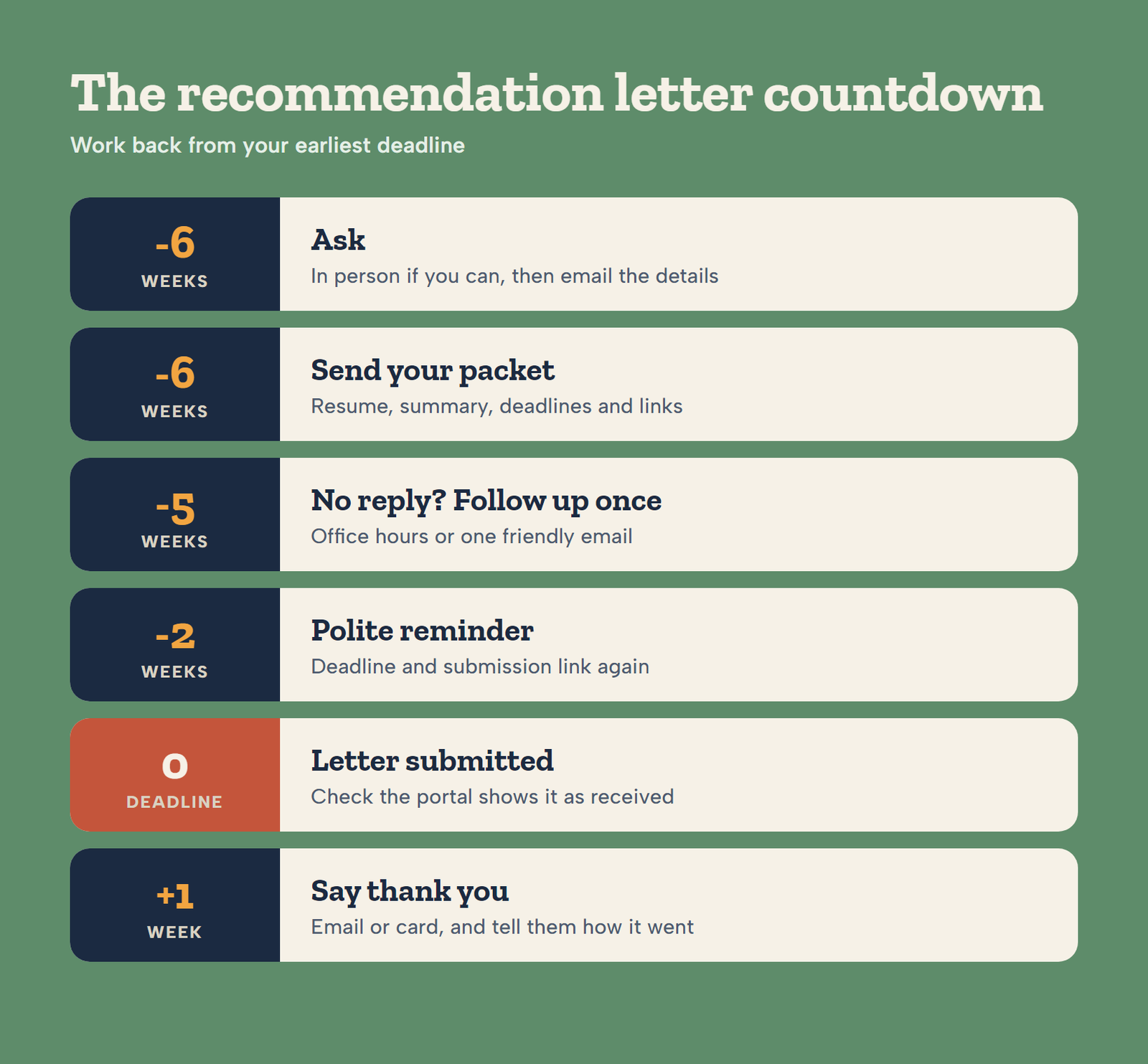
Give at least 4 to 6 weeks before your deadline. Professors write letters for a lot of students, often in the same busy weeks before winter break, and a rushed letter is rarely a strong one. If you’re applying to several programs with different deadlines, go by the earliest one.
Planning a heavy application season? Our time management guide can help you fit it around classes and finals.
How to ask
Ask in person when you can, during office hours or after class, then follow up by email with the details. If you can’t meet, a clear email works fine.
Either way, ask whether they can write you a strong letter, not just a letter. It gives them an easy way to say no if they don’t know you well enough, and a lukewarm letter can hurt more than it helps.
Email template
Subject: Recommendation letter request: [program or scholarship name]
Dear Professor [Last name],
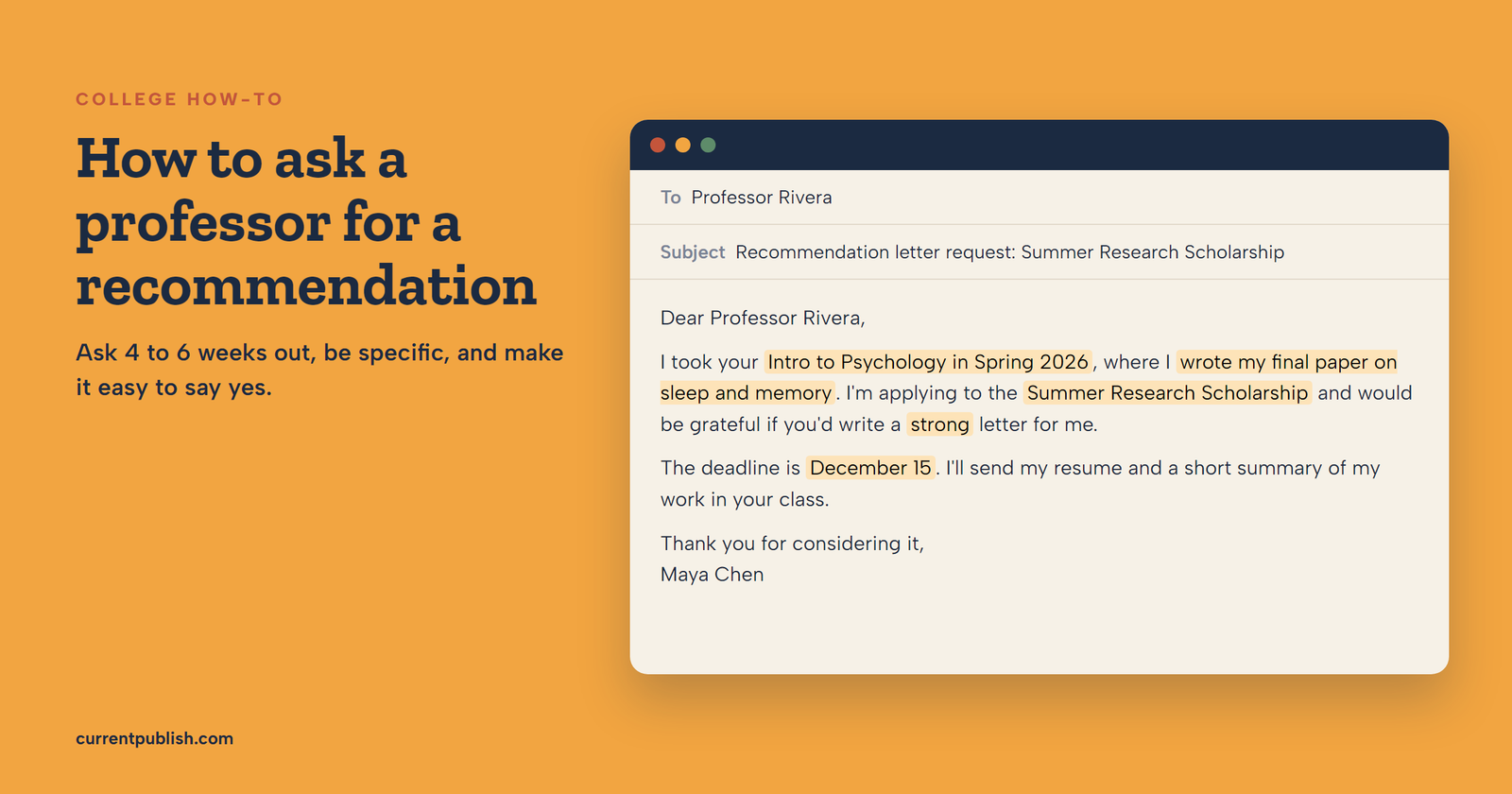
I took your [course name] in [semester], where I [one specific thing: wrote my paper on X, led the group project on Y]. I’m applying to [program/scholarship] and would be grateful if you’d be willing to write a strong letter of recommendation for me.
The first deadline is [date]. If you’re able to, I’ll send my resume, a short summary of my work in your class and the submission details for each application. I’m also happy to stop by office hours to talk about it.
Thank you for considering it,
[Your full name]
[Major, year, student ID if your school uses it]
What to send once they say yes
Make the letter easy to write. Send everything in one email, or one shared folder, so they don’t have to dig:
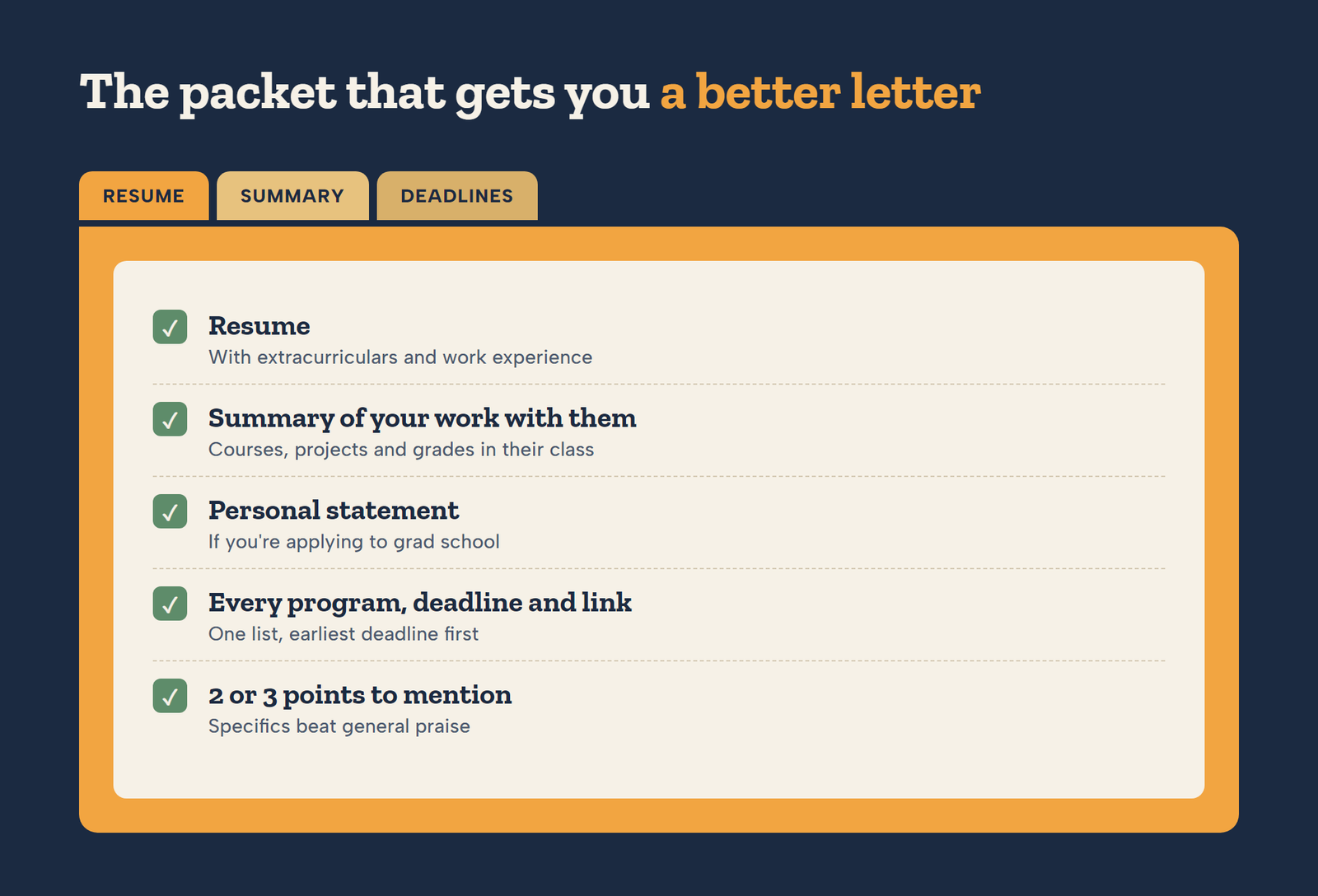
- A summary document of the courses you took with them, projects and grades.
- Your resume, including extracurriculars and work experience.
- Your personal statement or essay, if you’re applying to grad school.
- A list of what you’re applying for and where, with each deadline and how the letter gets submitted.
- Two or three points you’d love them to mention, like your research paper or how you improved over the semester. It helps them write specifics instead of general praise.
Many application systems ask whether you waive your right to read the letter. Waiving it is common, and committees generally see confidential letters as more candid. Check each application before you send the request so the professor gets the link right away.
Following up without being annoying
- No reply after a week? Stop by office hours or send one short, friendly follow-up.
- Two weeks before the deadline: send a polite reminder with the deadline and submission link again.
- After it’s submitted: send a thank-you email or card within a week.
- When you hear back: tell them how it went. Professors genuinely like knowing, and it keeps the door open for the next letter.
Mistakes to avoid
- Asking a few days before the deadline.
- Asking someone who only knows your name from a 300-person lecture roster.
- Sending a request with no details, so they have to email you back for everything.
- Forgetting to tell them about extra deadlines you add later.
- Never saying thank you.
Applying for money too? Don’t miss our 2027-28 FAFSA guide, and if you’re chasing summer roles, see our internship resources.
Recommendation letter FAQ
How far in advance should I ask for a letter of recommendation?
At least 4 to 6 weeks before your deadline. The University of Pittsburgh’s career center recommends at least 4 to 6 weeks, and at minimum one month.
Is it okay to ask a professor for a recommendation by email?
Yes. Asking in person is best when possible, but a clear, polite email that includes the course you took, what you’re applying for and the deadline works well.
What should I send a professor writing my recommendation letter?
Your resume, a summary of your courses, projects and grades with them, your personal statement if you have one, and a list of every program with its deadline and submission instructions.
Should I send a reminder?
Yes. Send a polite reminder about two weeks before the deadline, and follow up after a week if you haven’t heard back on your original request.
What if a professor says no?
Thank them and ask someone else. A no usually means they don’t feel they know you well enough to write a strong letter, which saves you from a weak one.
Should I waive my right to see the letter?
Most students do. Many application systems ask, and committees generally view confidential letters as more candid.
The bottom line
Asking for a recommendation letter is a normal part of college, and professors expect it. Ask someone who knows your work, give them 4 to 6 weeks, send everything they need in one go, remind them once and thank them after. Use the planner above to put the dates in your calendar today.
Advice based on the University of Pittsburgh Career Central guide to asking faculty for recommendation letters, checked 2026-10-24. Always follow the specific instructions of each program you apply to.